How To Make Your Glute Bridges Harder
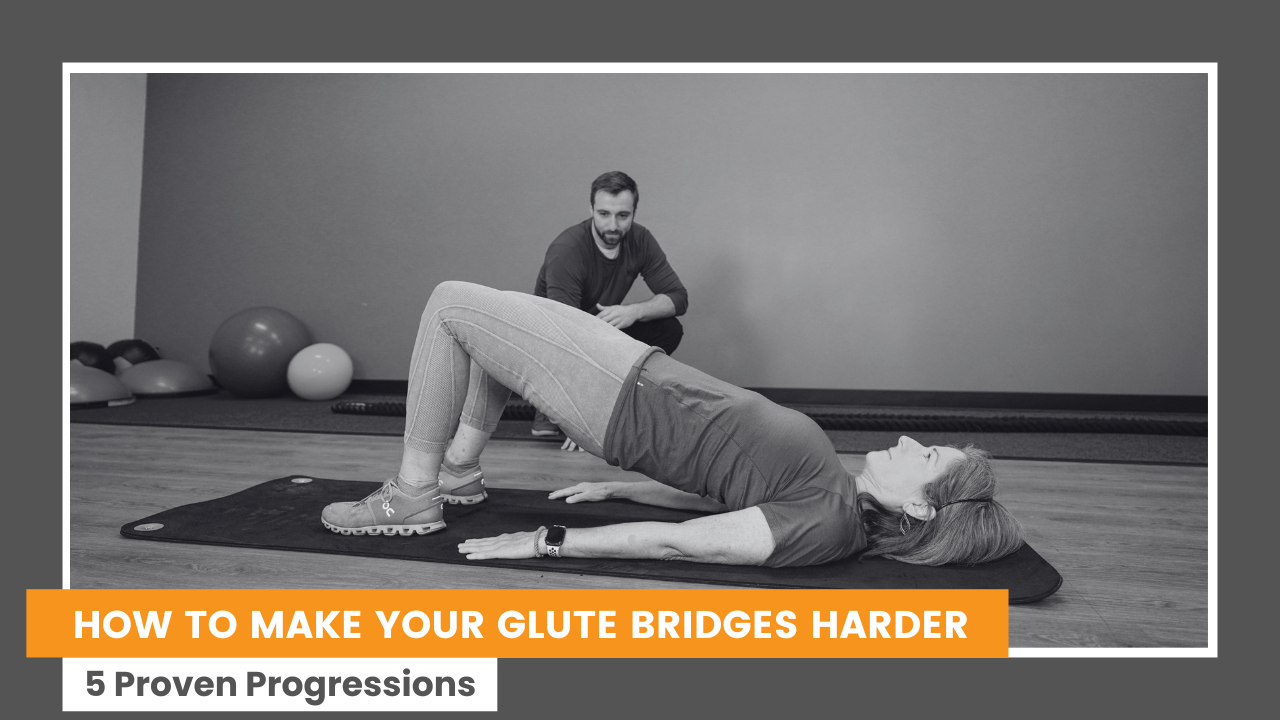
The glutes are some of the most important muscles in the body when it comes to preventing and reducing joint pain. Strong glutes help support your lower back, stabilize your hips, improve balance, and reduce stress on your knees during everyday activities like walking, climbing stairs, and getting up from a chair.
One of the safest and most effective exercises for building glute strength is the glute bridge. It's beginner-friendly, easy on the joints, and can be performed almost anywhere. However, as your strength improves, basic glute bridges may stop providing enough challenge to continue making progress.
In this article, I'll show you five proven ways to make glute bridges harder so you can continue building stronger glutes, improving hip strength, and creating a more resilient body.
Learn How To Perform The Glute Bridge
Glute Bridge March
The glute bridge march is an excellent progression that helps prepare you for single-leg glute bridge variations. Start by lifting your hips into a standard glute bridge position, then slowly lift one foot a few inches off the ground while maintaining level hips. This challenges your glutes and core to resist rotation and stabilize your pelvis, much like they do during walking, climbing stairs, and other daily activities. Once you can perform controlled glute bridge marches without your hips dropping or twisting, you're ready to progress to more advanced single-leg glute bridge exercises.
Single Leg Glute Bridge
The single-leg glute bridge is one of the most effective ways to increase the difficulty of a standard glute bridge using only your body weight. By performing the exercise on one leg, you place significantly more demand on the working glute while also challenging your balance and pelvic stability. This variation helps address side-to-side strength imbalances and improves the single-leg strength needed for activities like walking, climbing stairs, and getting up from the floor. Focus on keeping your hips level throughout the movement and driving through your heel to maximize glute activation.
Banded Glute Bridge
Adding a resistance band to your glute bridge is a simple way to increase muscle activation and make the exercise more challenging. Place a loop band just above your knees and actively press your knees outward throughout the movement. This engages the glute medius and other hip stabilizers, muscles that play an important role in supporting the hips, knees, and lower back. The constant tension from the band forces your glutes to work harder while also improving hip stability and control.
Weighted Glute Bridge
Once bodyweight glute bridges become easy, adding external resistance is one of the most effective ways to continue building strength. Place a dumbbell or kettlebell securely across your hips and hold it in place as you perform the movement. The added weight increases the demand on your glutes throughout the exercise, helping you develop greater hip strength and power. Start with a manageable weight and focus on achieving a strong glute contraction at the top of each repetition while maintaining good control throughout the movement.
Hip Thrusts
The hip thrust is a powerful progression of the glute bridge that allows for a greater range of motion and increased loading potential. With your upper back supported on a bench or elevated surface, you can drop your hips lower and drive them higher, creating a stronger contraction in the glutes. This increased range makes the exercise especially effective for building strength and muscle in the hips and posterior chain. Hip thrusts are a great option once you’ve mastered glute bridges and want a more advanced way to continue improving strength and reducing pain.